
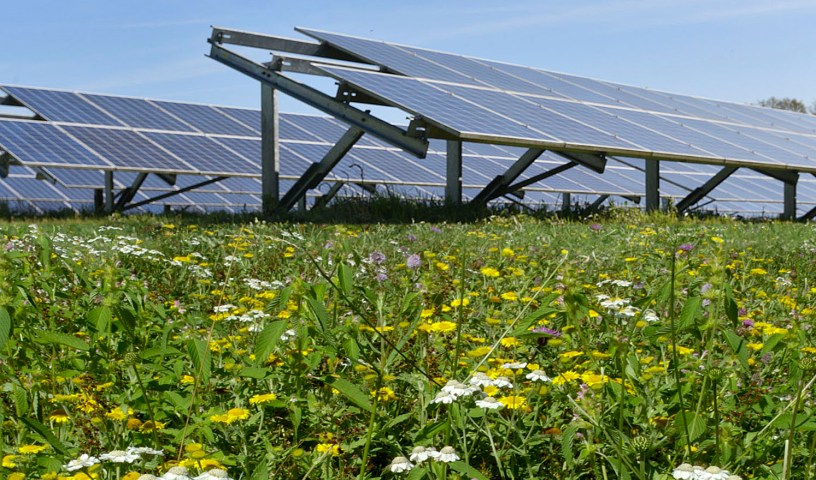
Solar Farms are a relatively low impact land-use and potentially offer opportunities for meaningful nature restoration and Biodiversity Net Gain, significantly at a landscape level. Indeed, benefits to the natural world are often offered up as reasons to support these projects and for Local Authorities to grant them planning permission.
A slow process
The problem with environmental restoration is that it requires long-term vision and commitment. Meaningful nature recovery is a slow process and builds over time. Sure, you can scatter a few seeds and plant a few trees but you cannot buy Harvest Mice, Grass Snakes, grasshoppers, waxcap fungi and the web of life that underpins good quality soil communities like they were off-the-shelf commodities. Nature recovery is not a transactional process nor is it a transferable product to be bought and sold like a house or car.
Nature recovery. There’s a clue in the name. Nature is the main driving force for meaningful recovery of the natural world. Man’s contribution is to lay the ground work and allow it to happen. Worthwhile recovery is best measured in decades and centuries, not months and years.
Local naturalists and conservation charities sometimes endorse Solar Farms, in the belief they will provide a permanent legacy for the natural world. In some instances, where agreements are in place from the outset, this may be the outcome. However, this requires commitment and agreement between all parties, landowners included. In the absence of any binding guarantees the long-term consequences for the natural world may not be as rosy as some imagine.
Planning and Biodiversity Net Gain
Despite their industrial appearance, Solar Farms are in planning terms classed as a temporary agricultural land use, one for which planning permission is required from a Local Planning Authority. Biodiversity Net Gain (BNG) is now part of the fabric of our planning environment with a requirement to demonstrate a minimum 10% BNG as an outcome for any project.
BNG calculations are essentially an exercise in statistics. As anyone familiar with this mathematical discipline knows, the outcome and conclusions drawn are entirely dependent on the quality and accuracy of data inputted. If you have a sceptical eye and the misfortune to read BNG documents submitted on behalf of housing developments you will know how it works and the conjuring tricks that are employed to demonstrate compliance with this planning requirement.
BNG calculations compare the predicted environmental outcome of a proposal with the ecological ‘value’ of the land prior to development, expressed as a percentage. It follows that the lower the ecological value of the land (measured in part by the habitat it supports) prior to development the greater the subsequent gains that can be portrayed.
Unsurprisingly, a frequent ploy with housing projects is for developers to assess the land as essentially environmentally worthless at the outset thereby increasing the magical ecological transformation effected by replacing green countryside with bricks, concrete and tarmac. At the extreme end of the spectrum, wily landowners have been known to impose compulsory chemical sterility on their land years ahead of an anticipated planning application, thereby allowing them to demonstrate, on paper at least, an ability to achieve near-miraculous über BNG.
To paraphrase Andrew Lang, many developers use BNG statistics like a drunk man uses a lamppost; more for support than illumination. Or put another way, lies, damned lies and BNG statistics as Mark Twain or Prime Minister Benjamin Disraeli might have said were they alive today.
When the lease runs out
Returning to Solar Farms, BNG calculations form part of the equation leading to planning consent being granted, just as they would with a housing development. BNG commitments need to be met and monitored for 30 years. But what happens to the natural world at the end of a Solar Farm’s life, when the lease (often 40 years) runs out and the land is returned to the stewardship of its owner?
If meaningful nature restoration has been achieved during the lifetime of the Solar Farm across the entire site (meadow restoration for example), then potentially there are profound implications for nature when the lease ends, given that the land will still be classed as agricultural. Specifically, I have come across Local Planning Authority planning permission conditions that require the land be ‘returned to its former agricultural state’ or words to that effect. And I have seen similar wording in Landscape Ecological Management Plan (LEMP) documents for Solar Farms with regards to their decommissioning phase with the additional requirement that the land becomes ‘…suitable for farming’. This presumably results from agreements between the Solar Farm developer and the landowner, and reflects the environmental leanings of the latter.
Removing solar panels and associated infrastructure as part of the decommissioning phase of a Solar Farm is understandable. However, if the land on which it sits was intensively farmed or subjected to imposed sterility prior to installation of the panels, then returning the land to its former agricultural state at the end of the lease would mean the intentional destruction of any nature restoration (or Biodiversity Net Gain if you prefer) achieved in the intervening decades.
Looking at the bigger picture, and beyond the 30-year timespan that applies to BNG, from a cynical perspective it would mean that restoration of the natural world on that particular plot of land would have been a waste of time were that to happen. More to the point, it would render meaningless in the grand scheme of things any BNG aspirations and promises made at the outset that influenced granting of planning permission for the project.
Future-proofing nature recovery
None of us can see into the future and know what it holds in terms of legislative protection for the natural world. Nor can we see into the minds of future landowners 40 years hence. However, we can plan for some of the foreseeable eventualities.
Setting aside agreements between developer and landowner, as far as I can make out there is no statutory requirement for land to be returned to its former agricultural state as part of the decommissioning phase associated with Solar Farms. In terms of LPAs, any such requirement is optional not mandatory and additional conditions can be included that, for example, require landscape and ecological features be retained during the decommissioning phase.
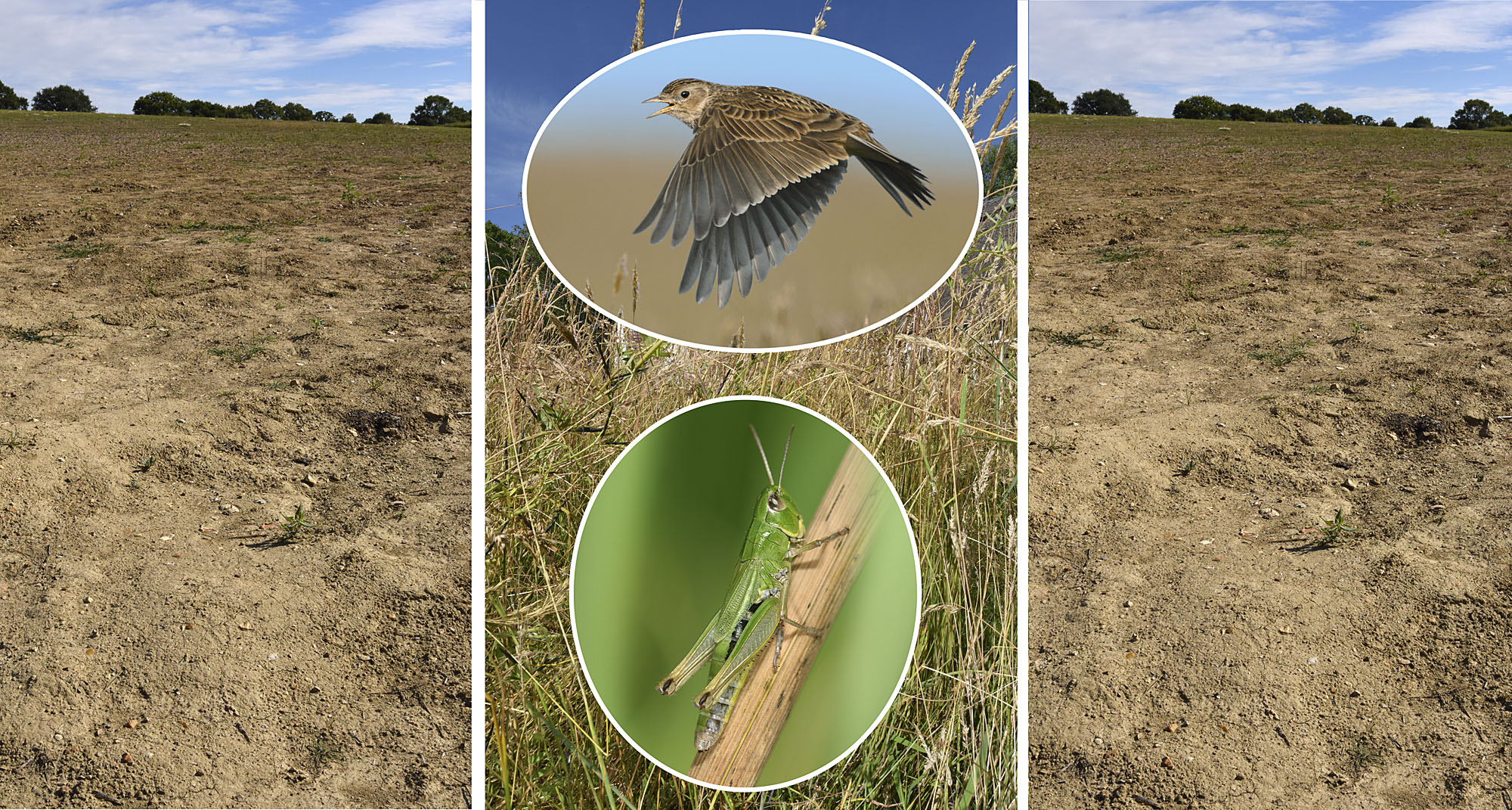
However, LPAs have no powers to impose biodiversity safeguards that extend beyond the life of the solar park lease. If they have sufficient environmental awareness to appreciate the long-terms consequences of their decisions, they will realise that a planning condition for the land to be ‘returned to its former agricultural state and suitable for farming’ legitimises and virtually guarantees the destruction of any nature recovery.
If genuine nature recovery really is placed centre stage, as part of the 30 by 30 commitments for example, then LPAs should ensure that lease-end farming-restoration is not a condition they impose as part of planning consent. And if Solar Farm developers and the landowners from whom they lease land are genuinely committed to the natural world and lasting Biodiversity Net Gain then phrases requiring land be returned to its former agricultural state should not form part of adopted LEMPs. Ideally there should be a commitment on all sides to retain all ecological enhancements achieved over the duration of the lease beyond its termination. How that could ever be policed or enforced is any one’s guess: on the basis of probabilities, most signatories to any agreements are likely to be dead by the end of the lease and developer entities may not even exist. Regardless, that would be a worthy ambition.
Solar Farms have a chance to play a meaningful role in addressing the tragic loss of biodiversity and nature-rich habitats in the UK that has occurred over the last five decades. However, they can only succeed if the recovery process continues after the lease expires. Otherwise, if BNG measurements were to be calculated from the start of the project to Day 1 after the Solar Park lease expired, Biodiversity Net Gain would most likely be zero.
 nplsecondnature.com