

By Paul Sterrry
My age and disposition mean I am not normally given to shouting from the rafters and demonstrating in public. However, recent Government pronouncements have changed that. Particularly utterances from our dear leader Sir Kier Starmer and his enforcer Rachel Reeves. Comments made by the latter sound increasingly like ill-considered presidential executive orders designed to provoke and court controversy (that developers can stop worrying about bats and newts, for example). In that regard they have succeeded because alarm bells have gone off across the conservation world.
Starmer and Reeves seem to see the natural world, not as our home with us as guardians, but as an obstacle in the way of the country’s shining path towards success and prosperity. I do not share their vision and, consequently, I have been musing on pithy slogans for my demonstration placards. Hence the title of this blog.
I differ from the Prime Minister and Chancellor, and those to whom they seek to pander, because I recognise planet Earth as a wonder to be cherished not a resource to be exploited. I see worth and meaningful prosperity in stability, sustainability and a flourishing healthy environment. And I value all the planet’s plant and animal inhabitants, humans included. This outlook on life means I try to show in my actions compassion for and consideration towards those less fortunate than myself, as well as those without a voice. Again, I include in this equation both people and all other forms of life.
For me, the natural world is what makes life worth living. In these current times, it is often the only thing that makes life worth living. Hence my passion to want to protect it and thwart the efforts of those who seek to destroy it. Consequently, my political leanings could probably be described as left of centre and historically I have always voted accordingly.
However, while Starmer and Reeves remain in power, one thing is certain: I shall never vote Labour again. And I suspect I am not alone. In fact, from straw polls I have taken I know I am not alone. Like many others who care about biodiversity and indeed prospects for the planet, I can’t remember feeling such a sense of betrayal and environmental foreboding.
All this makes me wonder whether poor Rachel saw something nasty in the woodshed in her formative years. I struggle to think of another reason why she should have such contempt for the natural world and such a fixation about newts and bats. Or could it be that other, darker forces are driving the rhetoric? The focus on bats and newts certainly resonates with the greed-driven whining of property developers heard with increasing volume in recent years.

Environmental background
Stepping back a pace, for the benefit of the Sir Keir and Rachel from accounts, perhaps it is time for spot of Existential Ecology 101. So here goes. Firstly, we need to answer the question what is biodiversity? On the grand scale it is a measure of the variety of life on earth. My reasons for supporting biodiversity are fundamentally ethical and moral – with the privilege of living on planet Earth comes the responsibility of taking care of what is, after all, our home. However, that argument will cut no ice among those for whom greed and self-interest (sorry, economic growth) dictate their outlook on life. For them, they need to understand what’s in it for them.
The greater the biodiversity in a given area, the greater the complexity of its ecosystems. With complexity comes a degree of stability and an ability to withstand short-term environmental variations – a buffer if you like – and the possibility of habitats and their inhabitants adapting to longer-term trends. A stable ecological environment means a stable and sustainable economic environment, one in which people can continue to thrive. The goal: to ensure lasting, globally-stable ecosystems – and hence a stable planet – for future generations of plants and animals, humans included.
Destruction and degradation of the planet, loss of biodiversity and climate change go hand-in-hand in terms of the trajectory towards making the Earth uninhabitable or not worth living on. Addressing the blights of biodiversity-loss and climate change head-on and as a matter of urgency might just buy us enough time to save what we can of dwindling nature, with the hope that the self-inflicted existential threat of global warming and its underlying causes are addressed and resolved in time.
Escape to what was the country: housing and habitat destruction
In recent years when the fight for the natural world has become most intense, the single most significant factor driving the destruction and degradation of natural environment where I live (Basingstoke in north Hampshire) has been housing development in open countryside. Self-enrichment, self-interest and corporate profit have been the driving forces, not a desire to improve the lot of the population. The result has been that wildlife-rich open countryside habitats have been destroyed and are now littered with dismal 5-bedroom mansions-in-miniature. The fragmented landscape is undergoing ecological death by a thousand cuts.
I was born in Basingstoke and now live in what passes for open countryside just to the north. The town is such a dispiriting ecological blot on the landscape that I really should be inured to environmental disappointment. However, despite all that this portion of north Hampshire has suffered, it still retains pockets of rich biodiversity. That makes me all the more determined to fight for what’s left.
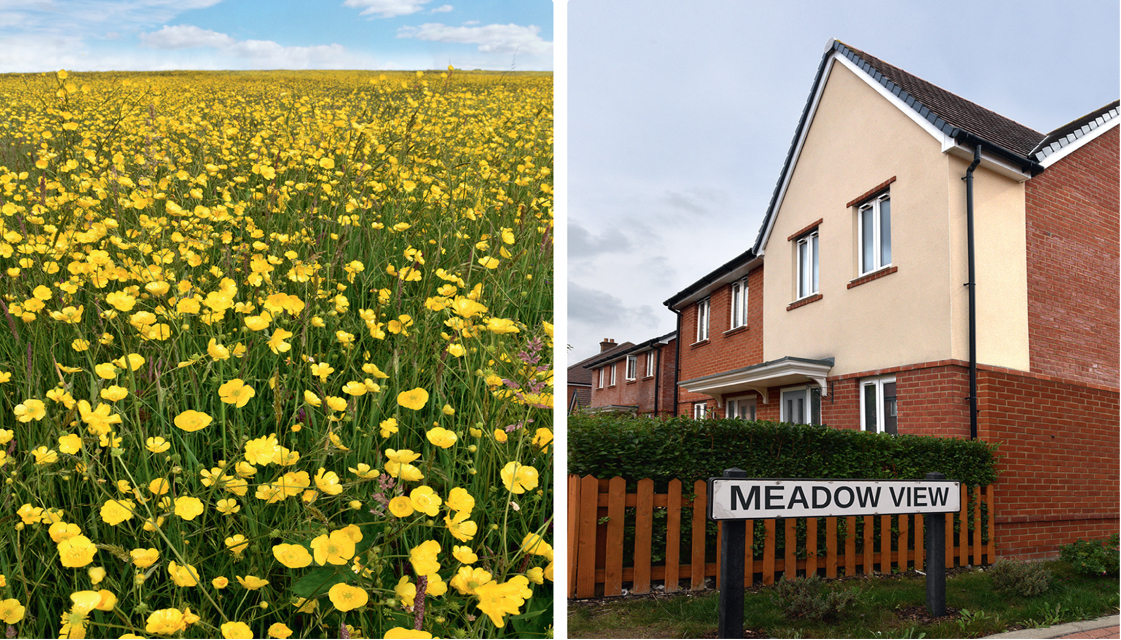
As well as being dismayed by the Chancellor’s recent utterances regarding planning, bats and newts, I must admit to being surprised. As someone who has tried and mostly failed to achieve the least awful outcome for wildlife in my dealings with authorities, I have got news for you dear Rachel – in reality the planning system is already skewed in favour of development with the natural world relegated to at-best an irritant in the process.
In terms of the reality on the ground, even existing laws fail to prevent meaningful biodiversity decline and loss of existing wildlife, at least where I live. The natural world is treated as a transactional commodity where habitats whose ecological complexity have taken centuries to develop can be destroyed and replaced by greenwash promises and the scattering of a few seeds.
The Chancellor’s attitudes reflect those of developers I have battled against for the last decade. People whose aim seems to be to remove every last environmental hiccup in their path that might cost them time and money. Even if Reeves’ comments are merely blustering rhetoric, they will have emboldened avarice and self-interest in society.
In the time I have spent trying to fight for the natural world in the planning system, I can only recall one instance locally where biodiversity or the environment stopped a development in its tracks. In most instances, environmental considerations were either marginalised, disregarded or excluded from the decision-making process. To compound matters, I have come across countless instances where developers and compliant ecologists working on their behalf have lied in their submissions in an attempt to downplay the environmental destruction their development will wreak.
Even truthful developers know how to play the system and are aware the odds are stacked in their favour. At best, it is just a handful of protected species and species of principal importance that might be given some sort of consideration. As for the rest, once open countryside is covered in bricks, concrete and tarmac it is curtains for the wildlife that were its former residents. Sure, a housing estate will over time accommodate a different suite of natural residents but the original occupants will be lost forever.
Starmer and Reeves present housing development and safeguarding the environment as a binary choice, with those who care about the environment portrayed as obstructing growth. It is not an either/or situation. With a responsible vision for a better world, you can create good quality affordable and sustainable housing and protect and enhance the natural world. That really should be the ambition of any decent politician. Biodiversity and the natural environment need to be seen as opportunities not obstacles.
If the government remains fixated on its obsession with building houses at pace, we need stronger not weaker environmental legislation; more rigorous and properly-funded ecological scrutiny of planning applications and their environmental impacts not less; and the willingness to say no to the most egregious of ecologically-destructive plans. Build in economic haste, repent at environmental leisure should be a government mantra.
I guess what you can say about attitudes in numbers 10 and 11 towards the natural world is that at least they are not out of step with previous regimes. Since the glory days of the Nature Conservancy Council back in the 1970s and 80s, successive governments have sought to dismember and neuter nature conservation, water down accompanying legislation and ensure subservient compliance among its representatives. The process that began in the Thatcher era seems to have new and enthusiastic advocates in our current Prime Minister and Chancellor, who appear to want to scrap every bit of environmental legislation that stands in the way of short-sighted and materialist growth.
What can be done? I have no answers but some suggestions.
- When it comes to housing, build upwards not outwards, restrict development to brownfield sites, repurpose and refit existing structures in towns and cities, make sure infrastructure and services (water and sewage) are in place before development is even considered.
- If you are going to make sweeping changes to the law then how about penalising those who get planning permission but delay building? There are said to be more than a million dwellings for which planning permission has been granted but which have not been built.
- Remove VAT exemptions for new build homes to encourage better use of existing potential sites and redevelopment.
- Write to your MP. I hear whispers about environmental dissent within Government so you could try lobbying your representative. To Labour MPs with an environmental conscience, I would say you surely know the direction your leaders are taking you. Stand up for what is right and don’t toe the leadership line. The only chance you have of undoing the harm that has already been done to the natural world is to remove the occupants of numbers 10 and 11 Downing Street from power. And for those Labour MPs in marginal seats, I would say listening to the dissenting voices of your constituents and acting accordingly might represent the only slim chance you have of being re-elected.
- As an individual you should support, become members of and donate financially to organisations who fight for the natural world and whose collective voice and lobbying power is louder than any one person. The Wildlife Trusts and RSPB are obvious contenders. However, in the wake of the controversy surrounding comments made about the then-PM Rishi Sunak by RSPB, conservation charities are much more cautious about speaking out in public. So, more than ever they need your support and encouragement to speak truth to power.
- Donate money to organisations that buy land for nature and hence remove it from the potential of being destroyed by development. Again, the Wildlife Trusts and RSPB are obvious contenders.
- Wherever you can, argue and promote the case that we need stronger not weaker environmental legislation. Some people appear to pin their hopes on Biodiversity Net Gain. While the process may be well-intentioned it offers a false hope, if protecting what remains of the environment is your goal, being riddled with opportunities for deception. Most significantly, it is a post-consent planning consideration and does nothing to prevent the ecological destruction that inevitably occurs on building sites.
In summary, I had such high hopes for the new Labour government. Now, I can’t wait to see the back of them or least those who prostrate themselves on the altar of growth at any environmental cost. The worry for me is that they may simply reflect the will of the electorate and the overriding self-interest that manifests itself in some of my neighbours. I hope I am wrong. And at the moment I don’t see any political alternatives able to stand up for nature and willing to fight for environmental survival.
Destruction, degradation and exploitation of the Earth continue apace thanks to the actions of humans both at the global level and much closer to home. Personally, I don’t see a future for our planet in the long term, given what I know of human nature. So why carry on the fight you might ask? Well, the answer is I am prepared to admit I might be mistaken. I sincerely hope I am but this will only happen if everyone who cares about the natural world shouts from the rafters.


Dear Author,
Anyway, all I wished to say was that I totally agree with you about the Labour leadership, but what about the Green Party? At least your sentiments are part of their DNA!!
Keep up your great messaging…
Yours, (a fellow north of Basingstoker), Martin.
>
LikeLike
Have you followed the Green Party? They are more obsessed with giving trans women rights and having 20 leaders so as to seem “inclusive” than caring about nature. What is more they are not anti nuclear and the building of Sizewell C and Hinckley Point are an environmental disaster. So I wouldn’t put my hopes in the Greens.
LikeLike
The solution to the housing crisis – as you put it – is not to build up! No one wants to live in high rises and this just takes people further away from the natural environment not closer. It is also unhealthy and risks a wealth of dangers – Grenfell Tower? 9/11? In fact as government – including Starmer – well know – the “housing crisis” is NOT caused by a lack of physical buildings. It is caused by a lack of will. And the selling of masses of buildings to foreign investors – indeed it’s been estimated that up to 25% of London has empty properties – owned by the Chinese the Arab Emirates etc (look at the New Zealand model – they had the same problem. Second in 2010 a law was passed permitting Sofia housing providers to sell off or rent 20% of properties to the market. Prior to getting into power local residents of Starmer – myself included – asked if he would repeal this legislation- he was non committal and to date he has been so silent on the issue most people don’t even know the law exists!! We are so conned in this country bBy the belief we need to build more more and more no one questions it. But it’s a myth!
LikeLike